
Whether you’re just starting out, or you’ve been in the sole trader game for years, there’ll always come a time when you need to find new clients. Maybe a big contract wraps up. Maybe you’re ready to raise your rates and level up. Maybe you’re curious about new projects in new industries (you should go for it!).
Whatever the reason, how do you actually find those clients or customers? And once you’ve found them, how do you keep the good ones and gently let go of the… less-ideal ones?
In this article, we’ll look at different ways to find clients, how to find the right ones (not just those with a pulse and a wallet!), how to manage them, how to break up with them when it’s no longer working, and a few strategies to help you get in front of your ideal clients and turn one-off jobs into ongoing work.
Sound good? Let’s do this.

Finding clients
The first question is: where are your clients hanging out?
There isn’t one magical place where all clients or customers live (if only!). Where and how you find them depends on what you do, who your ideal customers are, and how they like to shop.
A dog groomer in suburban Brisbane will find clients very differently to a SaaS copywriter in regional NSW. Your job is to go where your clients already are, rather than trying to drag them somewhere new.
For example:
Online platforms
If you’re a tradie, removalist, landscaper, handyman, creative, consultant, or similar, directories and job platforms can be a handy way to get in front of people who are already shopping around.
For service-based businesses, sites like HiPages (where you pay for leads and quote on jobs) and Airtasker can be especially useful early on, before you’ve built a strong reputation, as a quick way to get jobs, reviews, and experience.
If you’re a freelance copywriter, designer, developer, photographer, virtual assistant, or consultant, platforms like Upwork or Fiverr connect you with clients all over Australia (and beyond), help you build a portfolio, get testimonials, and sometimes lead to longer-term or retainer work.
Just remember these sites are very price‑competitive. Decide your minimum acceptable rate so you’re not working for peanuts (you’re not a monkey!).
Digital ads and search
When people are already searching for what you do, showing up at the right time is half the battle.
Google Ads, a solid Google Business Profile, and basic SEO (through your business website) can all help you capture ‘someone near me’ searches. For example, a landscaper in Melbourne who uploads before‑and‑after photos and asks every happy client for a review may eventually outrank bigger companies in local searches simply by having a stack of 5‑star ratings.
Paid ads on platforms like Google or social media can also push you in front of more of the right eyeballs, especially when you’re promoting a specific offer or trying to break into a new area. Just keep an eye on what you’re spending versus what’s coming back in booked work.
Online platforms if you’re selling products
If you sell products, platforms such as Amazon, eBay, and Etsy can put you in front of customers who are already in a buying mindset. Instead of trying to drag people from Instagram over to your website, you’re placing your products where millions of shoppers already search.
Competition can be fierce on these platforms, but paid advertising options can help you cut through. Sponsored Products on Amazon, Promoted Listings on eBay, and Etsy Ads can all bump your products higher in search results so more people see them.
Used well, these tools can put your best‑sellers in front of the right people at the exact moment they’re ready to buy – just keep an eye on your margins so you’re not paying more in ad spend and fees than you’re making back in profit.
📖 Want to learn more about measuring and growing profit? We have a guide for that.
Social media: pick your platforms strategically
You don’t need to be everywhere on social media. You just need to be where your ideal clients already are, and play to your strengths.
If your business is visual – photographers, graphic designers, makeup artists, stylists, jewellery makers – Instagram is likely a good option. A wedding photographer in Tasmania, for example, could build a grid of their best work, tag venues, and share “real weddings”. Venues may start to recommend them because they consistently share beautiful images from those locations.
If you’re a fitness coach, tutor, consultant, or do any kind of teaching or explaining, TikTok and YouTube can work well for short, practical “how to” videos.
Facebook groups can also be great for finding customers – the more specific the group, the better. Selling eco‑nappies? A conscious parenting group is ideal. Just be helpful, answer questions, and don’t spam the group (no one loves the “here’s my link again, just in case you missed it the first five times” person). You can even run your own Facebook group to build a community around a niche, but it takes time and energy to create content, moderate and respond, so only go there if you’re ready to commit.
If your clients are other businesses (B2B), LinkedIn can be gold. It’s especially useful for consultants, copywriters, designers, HR professionals, trainers, coaches and virtual assistants, and also for product‑based sole traders selling into businesses. Make sure your headline and bio clearly state what you do and who you do it for. Use LinkedIn’s search to find ideal clients by job title or company, and focus on engaging with their posts and starting conversations rather than jumping straight to the hard sell.

Offline options
Online is great, but don’t sleep on in‑person client-finding strategies, especially if your work is local or relationship‑based.
Consider local business networking groups, industry conferences and trade shows, and specialist meetups or events.
If your business is local, putting flyers up around the neighbourhood or through letterboxes can work well, particularly for services such as hairdressing or plumbing when people typically want something nearby.
Speaking and events
One of the most powerful ways to find new clients is to get in front of them live – whether that’s in a room, on a Zoom call, or on a stage.
Speaking at other people’s events and running your own workshops, webinars, or information nights can position you as the go-to expert, build trust faster than social posts, and put you in front of a group of potential clients at once.
You don’t have to be a polished TED speaker. You just need something useful to share, and a clear next step for people to take.
Speaking at other people’s events is the ‘borrowed audience’ strategy: you tap into communities and events someone else has already built, such as business networks, industry meetups, niche communities, and online summits. Solve a problem for their audience and at the end, offer a simple next step – a checklist, a sign‑up sheet, or a flyer.
Running your own events means you build your own audience around your expertise. You might host a workshop, webinar or open day. A nutritionist, for example, could run a ‘Meal planning for busy families’ session and invite attendees to book a short program or consultation afterwards. Capture contact details at registration, then follow up after the event with a thank you, any promised resources, and a reminder of next steps.
Collaborations, referrals, and agencies
Partnering with other businesses can be a great way to attract new clients.
You might work with businesses that share your audience but aren’t direct competitors. For example, a candle maker could partner with a local florist to create ‘flowers + candle’ gift bundles for Mother’s Day. Or a yoga instructor might collaborate with a wellness retreat owner. You can refer clients to each other, create joint offers, or run events together – everyone wins!
In some industries, agencies regularly use freelancers when they have overflow work – this is common with PR and marketing agencies and creative studios. You might start as a ‘backup’ contractor and end up with a steady stream of work without needing to find every client yourself. Nice!
Remember: it’s your pond or your ocean
What works for you might not work for someone else – and vice versa. If you’re niche, your pond might be small but full of exactly the right fish. If your products or services are widely applicable, your potential market might be the whole ocean, which just means you need to be very clear on who you’re trying to appeal to.
You don’t need to try everything at once. Pick two or three channels that fit your business and personality, stick with them for a few months, and refine from there.
Finding the right clients
When you’re just starting out, it’s tempting to say yes to anyone who’s breathing. That’s normal! Early on, you’re focused on income, experience, and collecting testimonials and reviews.
But at some point it’s in your best interests to be more selective. You may notice some clients drain your time and energy, ghost you, or constantly try to lowball your fees. They’re not necessarily bad people, but they’re probably not good clients for you. You need (deserve!) to be paid on time, have your skills and time respected, and build a business that’s sustainable – not turn into a 24/7 stress machine.

While it’s lovely to work with people who are nice, some clients are simply more valuable to your business than others. A landscaper might earn more per project in neighbourhoods where clients have bigger blocks and bigger budgets. A copywriter might earn more from one ongoing retainer than from a dozen tiny “Can you just quickly fix this?” jobs.
The ‘right’ clients are usually those who can and will pay your rates, respect your boundaries, be reasonably clear on what they want (or open to guidance), and are likely to stick around. You’ll know you hit the client jackpot when you don’t dread seeing their name in your inbox.
Designing offers for the right clients
Once you’ve found clients you want to invest in, you can start to think about how you can serve them better – and more profitably.
Could you bundle your services or products?
- A photographer might offer a package comprising a brand shoot, social media content pack, and quarterly mini‑shoots.
- A ceramic artist who sells bowls and mugs could bundle a ‘paint your own mug’ workshop with a ‘mug of the month’ subscription.
You can also expand your services or products to meet more of your best clients’ needs.
- A copywriter who writes website copy might also provide launch emails and landing pages.
- A personal trainer could create a short digital course for a company’s employees, alongside one‑on‑one or group training.
You’re not upselling for the sake of it – you’re solving more problems for clients who already value what you do.
Managing your clients
Once you have clients on the books, that’s not the end. In fact, it’s where the real game starts: keeping them, delighting them, and making it easy for them to work with you again and again.
Some of the key ways to do this are:
Communication
It’s important to stay in touch – and not just when you want to sell something!
A regular newsletter is an easy way to share tips, how‑to’s, a bit of behind‑the‑scenes, client success stories, and updates on new services, pricing or availability.
A YouTube channel can also work well if you can teach, show, or explain what you do. As well as being a great way to attract new people, it also gives existing customers somewhere to go for helpful content.
Merch is another simple way to stay top‑of‑mind. Small items such as branded pens, mugs, stickers, reusable shopping bags, or fridge magnets can all work. It doesn’t have to be fancy – a plumber leaving a fridge magnet with their number after each job can be surprisingly effective!
SMS reminders, WhatsApp groups, or private online communities can also be used for your best customers, depending on your business.
A CRM (customer relationship management) system – anything from a simple spreadsheet to dedicated software – helps you track clients, remember who’s who, and follow up at the right times to look after them.
The key is proactive communication. Don’t wait until clients are confused, frustrated, or wondering where you’ve gone!
Contracts, scope, and boundaries
Some clients are lovely, but cheeky. You start with a clear project, and then suddenly you’re hearing, “Can you just do this one extra thing?” (with no extra fee – say what?).
A clear contract and scope of work can save you a lot of hassle. Spell out what is and isn’t included, and how additional work is charged. If you’re a graphic designer and your contract includes two rounds of revisions, you can calmly explain that a third round will cost extra.
Boundaries aren’t about being difficult – they’re about running a sustainable business where clients know what to expect.
Communicating price increases
With inflation and rising costs, you’ll probably need to raise your prices at some point, update your minimum project size, or retire older, low‑priced packages. After all, you’re not running a charity (even if you work with non‑profits).
To make price increases smoother: Give clients advance notice, remind them of the value and outcomes you’ve delivered, and mention any improvements you’ve made to your service or products.
The more consistently you communicate your value, the easier it is for clients to understand and accept when prices go up.
Breaking up with clients
Sometimes it’s them. Sometimes it’s you. Sometimes it’s just not working anymore for either of you.
One of the perks of being a sole trader is that you get to choose who you work with (yay!). That includes deciding when it’s time to say goodbye.
When it’s clearly them, you’ll probably see some familiar red flags: they constantly lowball you, argue about your rates, pay late, ghost you, or are just plain rude. In those cases, it’s not just ok to walk away – it’s smart.
Sometimes, though, it’s not really anyone’s “fault”. Maybe you’ve outgrown each other. Your skills and prices have increased and they genuinely can’t afford your new rates. Perhaps you’ve changed your services and no longer offer what they originally came to you for. Or their needs have shifted, and you’re no longer the best fit.
You can do this in a calm, friendly way. A short, polite message does the job: thank them for the opportunity to work together, let them know when you’ll no longer be available, and give a simple reason like “I’m shifting my business focus”. It’s a nice touch to hand over any files or recommend other providers who might suit them better.
Ending a client relationship can feel scary, but it frees up your time, energy, and headspace to work with better‑fit, better‑paying clients.
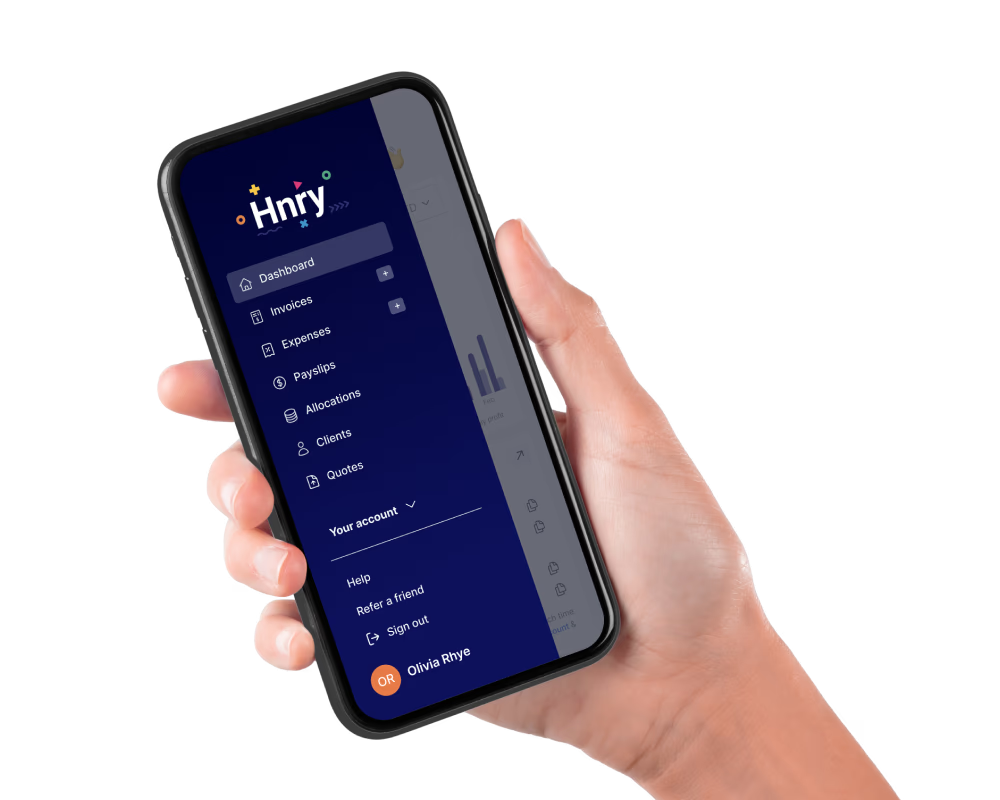
Hi, we’re Hnry!
Users who invoice through Hnry get paid 8 days faster on average. Plus, we actually chase your clients up (politely!) for you, so you don’t have to. Easy!
Hnry is an award-winning app that’s helping sole traders in every industry spend less time on financial admin, and more time doing what they love.
(Unless what they love is financial admin).
For just 1% +GST of your self-employed income, capped at $1,500 +GST a year, Hnry will calculate and pay all your taxes, levies and whatnot for you, including:
We also complete and lodge your tax return for you, including claiming any tax relief you might be entitled to. It’s all part of the service!
More importantly, we free up thousands of hours for you to focus more on what you do best – your job. Hnry is on a mission to make being a freelancer simple, affordable, and accessible for anyone.
Get your tax ducks (and deductions) in a row by joining Hnry today!