If you’re self-employed in Australia, tracking your business expenses isn’t just good practice – it’s a way to (legally) pay less in tax. Every tax deduction you claim reduces your taxable income, which lowers your overall tax bill.
We’ve all lost track of spending and receipts before. The more organised you are, the more you stand to save.
Here’s what you need to know.
Why tracking expenses matters
When you claim a business expense as a tax deduction, you’re not getting a direct refund – you’re reducing the amount of income the ATO can tax. Less taxable income means a lower effective tax rate, which means a smaller tax bill at the end of the financial year.
💡 An effective tax rate is exactly what it says on the tin: the actual percentage of your total income that you pay in income tax. For more information, check out our guide to tax rates for sole traders.
For example, if you earn $75,000 and claim $7,000 in valid expenses, you’re only taxed on $68,000. That difference can add up to thousands of dollars in tax savings!
What can you claim?
As a sole trader, you can generally claim expenses that relate directly to earning your income or running your business. Some of the most common ones include:
- Motor vehicle costs (for business use)
- Equipment purchases
- Cost of goods sold
- Subscription and software fees
- Mobile phone bills (business portion)
- Parking and transport
- Advertising costs
- Professional fees
A few things to keep in mind: if an expense is for both personal and business use, you can only claim the business portion. Assets costing more than $20,000 are generally claimed through depreciation rather than as an immediate deduction.
Keeping records for the ATO
The ATO requires you to hold onto receipts and records for five years after purchase – yes, five. That’s a lot of paper if you’re not organised about it!
Keeping clear, up-to-date records throughout the year is far less painful than trying to reconstruct everything at EOFY. At a minimum, you’ll want to store receipts (physically or digitally), note what each expense was for, and flag anything that’s partially personal use so you can calculate the right business percentage.
The easiest way to stay on top of it
The simplest approach is to log and record expenses as you go, rather than saving it all for tax time. That way, nothing slips through the cracks.
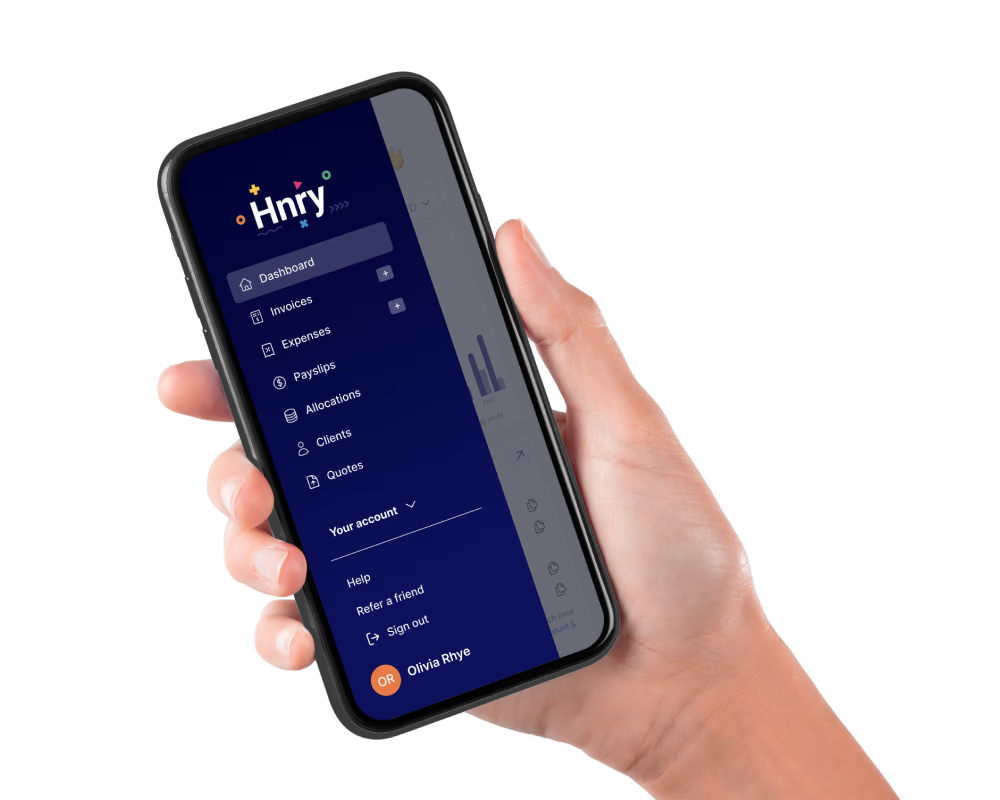
Hnry makes this about as easy as it gets. You snap a photo of your receipt, raise it in the app, and the friendly Hnry team handles the rest – including calculating your tax savings, managing your claims, and storing your receipts digitally for the full five years.
There’s even a Hnry Debit Card that automatically raises an expense every time you use it, so you’ll never accidentally miss a deduction again.
Sound good? Why not give Hnry a whirl?